Texture and Pattern Without Separate Pavers
Stamped Concrete in Winchester for patios and walkways where decorative appearance matters alongside durability
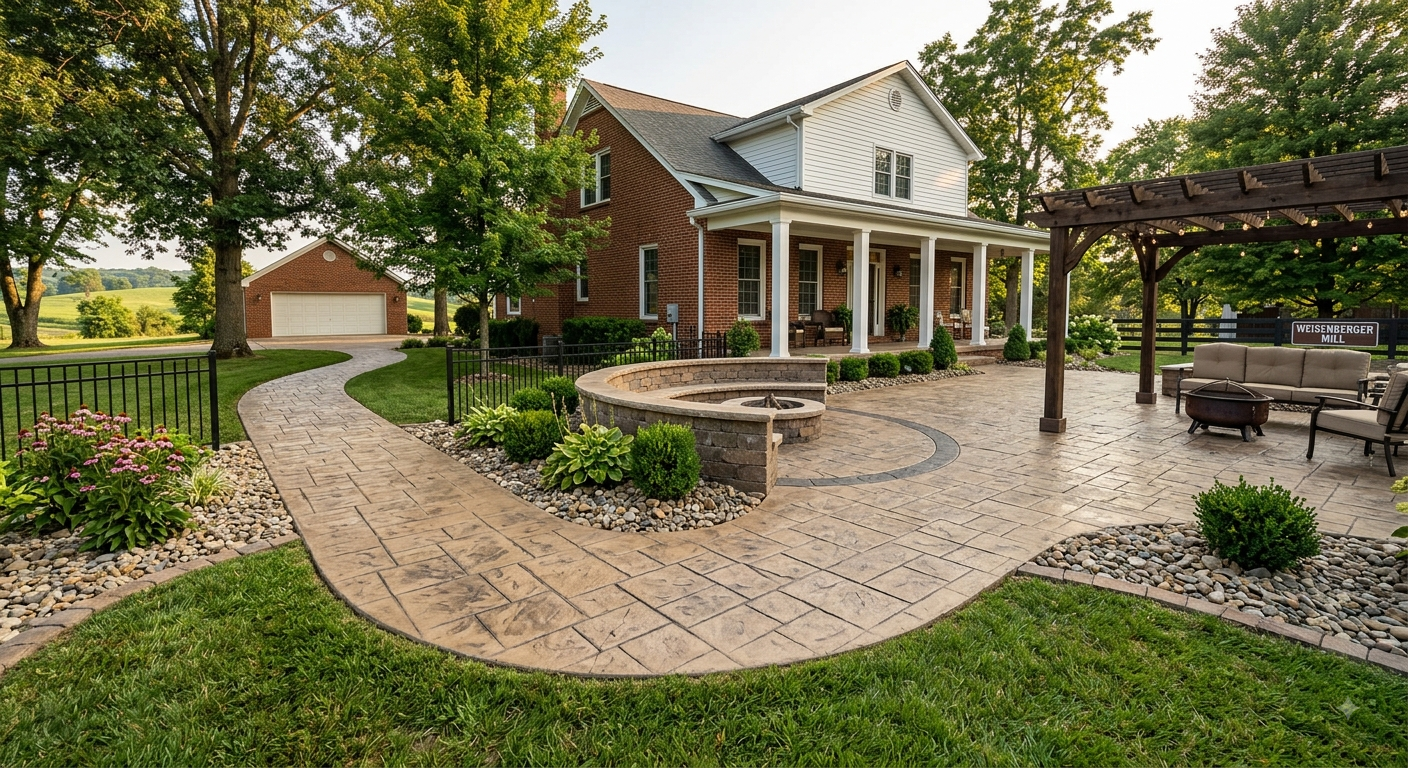
Stamped concrete creates the appearance of brick, stone, or tile while maintaining the structural continuity of a single poured surface, eliminating the gaps and joint lines where weeds grow and individual pavers settle unevenly. You choose this option when you want the visual character of more expensive materials without the maintenance issues that come from dozens of separate pieces shifting over time. SignatureCraft Solutions works with property owners across Winchester, Shelbyville, Versailles, and surrounding areas who need outdoor surfaces that combine decorative finish with the weather resistance of properly cured concrete, particularly for patios, front walkways, and pool decks where both appearance and slip resistance matter.
The stamping process happens while the concrete is still workable, using textured mats pressed into the surface to create patterns that replicate natural stone, wood grain, or geometric designs. Color is added through integral pigment mixed into the concrete or surface hardeners applied before stamping, with release agents preventing the mats from bonding to the concrete while adding accent tones that highlight the texture.
Arrange an on-site consultation to review pattern options and discuss how different textures perform in high-traffic areas.
How Stamped Concrete Addresses Both Function and Appearance
Installation follows the same subgrade preparation and concrete placement as standard flatwork, but adds surface treatment steps before the concrete hardens completely. Timing matters because the concrete must be firm enough to support the weight of workers and stamping mats without deforming, yet soft enough for the texture to imprint cleanly without tearing or sticking.
After the concrete cures and the sealer is applied, you'll notice a continuous surface with consistent texture across the entire area, no settling or separation between individual units, and color variation that mimics the natural inconsistency found in quarried stone or aged brick. The sealed surface resists staining from leaves, dirt, and outdoor furniture better than unsealed concrete, though the sealer requires reapplication every few years to maintain protection and color vibrancy.
Stamped concrete doesn't replace materials in every application—vertical surfaces, areas requiring specific load ratings, and locations where authentic material is specified for historical accuracy still need actual stone or pavers. The stamping process also requires favorable weather, as rain, extreme heat, or freezing temperatures during installation affect how cleanly the pattern transfers and how uniformly the color develops.
Common Questions About This Service
Customers planning decorative concrete work often want clarity on how stamped surfaces differ from other options and what maintenance the finish requires over time.
What makes stamped concrete different from standard flatwork?
Stamped concrete includes texture impressed into the surface and color added through pigments or hardeners, creating decorative patterns that standard flatwork doesn't provide, though both follow the same structural installation process.
How do Winchester's seasonal temperature swings affect stamped surfaces?
Properly sealed stamped concrete resists moisture infiltration that causes spalling during freeze-thaw cycles, but the sealer must be reapplied periodically because UV exposure and temperature changes gradually degrade the protective layer.
Can you stamp concrete to look like any material?
Stamping mats replicate the texture of stone, slate, brick, wood planks, and tile patterns, but the finished appearance depends on color application and how well the release agent creates contrast between raised and recessed areas of the texture.
What happens if stamped concrete cracks over time?
Cracks can occur along control joints or from substrate movement, and they're more visible on stamped surfaces than plain concrete because they disrupt the pattern, making proper subgrade preparation critical to long-term appearance.
How often does the sealer need reapplication?
Most stamped concrete requires resealing every two to three years depending on traffic levels and sun exposure, with high-traffic areas and south-facing surfaces needing attention more frequently than shaded or lightly used spaces.
SignatureCraft Solutions handles pattern layout, color selection, and sealer application during installation, then provides guidance on maintenance intervals that preserve the finish. Contact our team to review specific pattern and color combinations suited to your property's style and exposure conditions.