
Site Prep That Commercial Projects Depend On
Commercial Contracting Services in Winchester for job sites requiring excavation, concrete placement, or septic system installation
Commercial properties with underprepared ground, inadequate drainage, or aging septic infrastructure create complications that compound across every phase of a project. SignatureCraft Solutions addresses these conditions through commercial contracting work centered on excavation, concrete, and septic installation — the foundational trades that determine how well everything above and around them performs. Winchester-area commercial properties, from retail sites to agricultural operations, require this category of work before structural phases can proceed.
Commercial excavation operates at a different scale than residential work. Equipment selection, cut-and-fill planning, and site access logistics all require coordination specific to the project footprint. On commercial sites where septic systems serve multiple structures or high daily usage loads, system design and installation must account for peak flow rates and state inspection checkpoints that don't apply to single-family residential installs.
Schedule a site assessment to review excavation scope, concrete requirements, or septic capacity for your commercial property.
How Commercial Excavation and Concrete Work Together
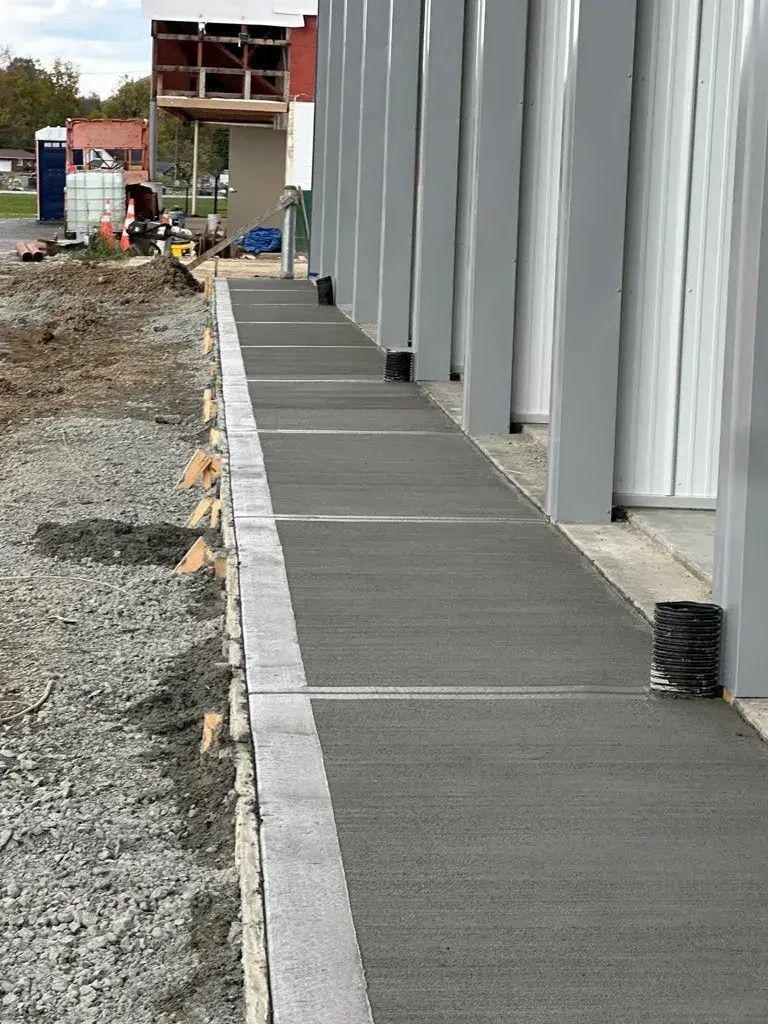
Commercial concrete placement depends on what happens at grade before the pour. Sub-base depth, compaction testing, and form layout all affect how a finished surface performs under equipment loads, vehicle traffic, or consistent foot traffic patterns. On sites where excavation and concrete are both in scope, sequencing these phases correctly prevents the rework that adds cost to an active timeline. SignatureCraft Solutions manages both trades to keep these steps coordinated rather than independently scheduled.
Once commercial site work is complete, the observable difference is in how the surface drains and how it responds to load over time. A properly prepared commercial concrete surface holds up under repeated use without developing the edge cracking or settlement that comes from inadequate base preparation. Drainage incorporated into the grade during excavation moves water away from structures rather than allowing it to pool against footings.
Commercial septic installations involve additional regulatory steps compared to residential systems. Capacity requirements and setback distances vary under Kentucky regulations based on commercial use type. SignatureCraft Solutions handles the excavation required for commercial septic installs and coordinates through the inspection process, keeping the installation from becoming a scheduling bottleneck mid-project.
Common Questions About Commercial Site Work
Commercial property owners and project managers often need specific process details before committing to site work — particularly when excavation, concrete, and septic installation overlap within the same project scope.
How does commercial excavation differ from residential?
Commercial excavation typically involves larger equipment, greater cut depths, and more detailed site planning for access and material staging. On Winchester-area job sites with tight access or existing utility infrastructure, sequencing requires coordination before any ground is broken.
What concrete applications are most common on commercial sites?
Parking areas, loading dock aprons, equipment pads, and perimeter flatwork are the most frequent commercial applications — each with different base depth and reinforcement requirements based on anticipated load.
Why does a commercial septic system require separate permitting?
Commercial systems are regulated under different state standards because they serve higher daily usage volumes. Permitting involves a capacity determination calculated based on the type and scale of commercial use.
When is sub-base preparation most critical on commercial concrete?
Base preparation is most critical on sites with clay-heavy or soft soil, or where heavy equipment or commercial vehicles will consistently use the finished surface. Inadequate compaction is the primary cause of premature failure on commercial flatwork.
What should be assessed before commercial excavation begins?
A site assessment should cover existing grade, soil conditions, utility locations, equipment access routes, and whether fill material will need to be imported or removed from the site.
SignatureCraft Solutions manages commercial excavation, concrete, and septic work as coordinated project phases — property owners and project managers in Winchester can arrange a site review to establish scope and sequencing before work begins.