
Air Sealing That Stops Heat Loss
Spray Foam Insulation in Winchester for homes with drafts, temperature swings, and high heating costs
When walls feel cold to the touch in winter or certain rooms never reach a comfortable temperature, the issue often traces back to air leakage around the building envelope. SignatureCraft Solutions applies spray foam insulation in residential and commercial spaces where traditional fiberglass batts leave gaps that allow conditioned air to escape. The material expands to fill irregular cavities, creating a continuous barrier that addresses both insulation value and air infiltration in a single application.
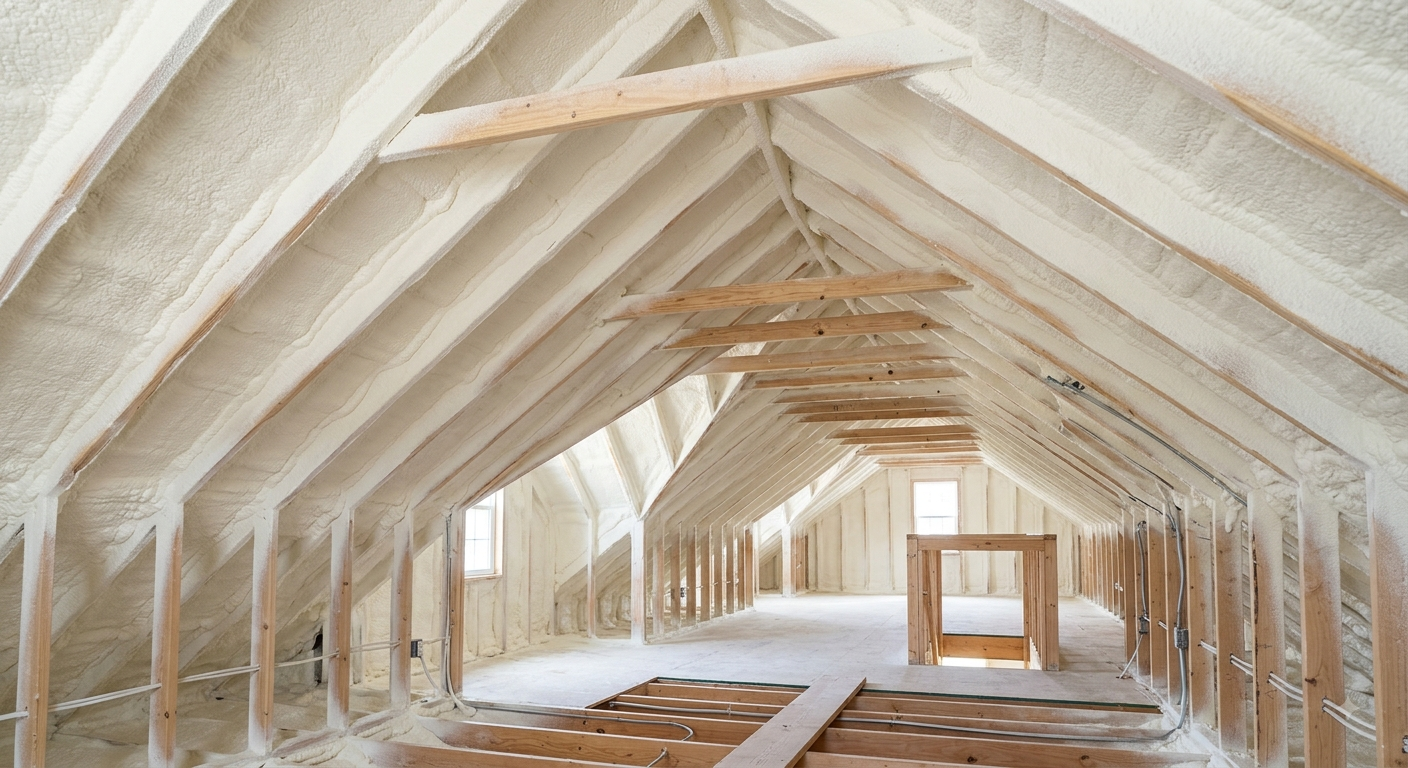
The service involves spraying a liquid mixture that rapidly expands and hardens, forming a rigid foam layer that adheres to studs, sheathing, and framing members. Unlike loose-fill or batt insulation that settles or compresses over time, spray foam maintains its shape and creates an airtight seal around electrical boxes, plumbing penetrations, and framing irregularities where air typically leaks. This approach is particularly useful in attics with complex rooflines, rim joists in basements, and wall cavities in older homes where standard insulation methods struggle to reach tight spaces.
Request a property assessment to determine whether spray foam insulation fits your building's specific air sealing needs.
What Proper Installation Requires
Spray foam application requires surface preparation to remove dust, moisture, and loose debris that would prevent adhesion. Installers mask windows, outlets, and fixtures, then apply the foam in controlled passes to build up the desired thickness without overheating or creating voids. Open-cell foam expands significantly and works well for interior applications where sound dampening matters, while closed-cell foam offers higher insulation value per inch and adds structural rigidity to walls and roofs.
After the foam cures, you'll notice that drafts around outlets and baseboards disappear, rooms reach set temperatures faster, and HVAC systems cycle less frequently. Walls and ceilings feel warmer to the touch in winter because the foam eliminates the cold spots that occur when air moves through gaps in traditional insulation. The material also acts as a moisture barrier in closed-cell form, reducing the likelihood of condensation forming inside wall cavities during temperature swings.
The service works best in spaces where air sealing is a priority, such as vaulted ceilings, bonus rooms over garages, and crawl spaces with exposed rim joists. It does not replace ventilation requirements in attics or address existing moisture problems, which need to be resolved before foam application to prevent trapped humidity from damaging framing or sheathing.
Questions Before Starting Your Project
Property owners typically want to know how spray foam compares to other insulation methods and what conditions make it the right choice for their building.
What is the difference between open-cell and closed-cell spray foam?
Open-cell foam is lighter, expands more, and provides sound dampening but offers lower insulation value per inch. Closed-cell foam is denser, adds structural strength, and delivers higher insulation value in thinner applications, making it suitable for areas with limited space like rim joists or exterior walls.
How long does spray foam take to cure before the space can be used?
Most spray foam formulations cure within 24 hours, though ventilation during and immediately after application is necessary to allow off-gassing to dissipate safely.
When should I choose spray foam over fiberglass or cellulose insulation?
Spray foam makes sense in areas where air leakage is a major concern, such as around band joists, in cathedral ceilings without ventilation, or in older homes with irregular framing that leaves gaps around traditional insulation materials.
Does spray foam require any ongoing maintenance after installation?
Once cured, spray foam remains stable and does not settle, shift, or degrade under normal conditions, so no maintenance is needed unless the building envelope is opened for renovations or repairs.
What factors affect the cost of spray foam insulation?
Thickness requirements, foam type, and the complexity of the application area influence cost, with closed-cell foam typically priced higher due to its greater material density and higher insulation value per inch.
SignatureCraft Solutions evaluates each property to determine whether spray foam insulation addresses your specific air sealing and insulation performance goals. Schedule a consultation to review your building's current insulation gaps and discuss whether foam application fits your project scope.