
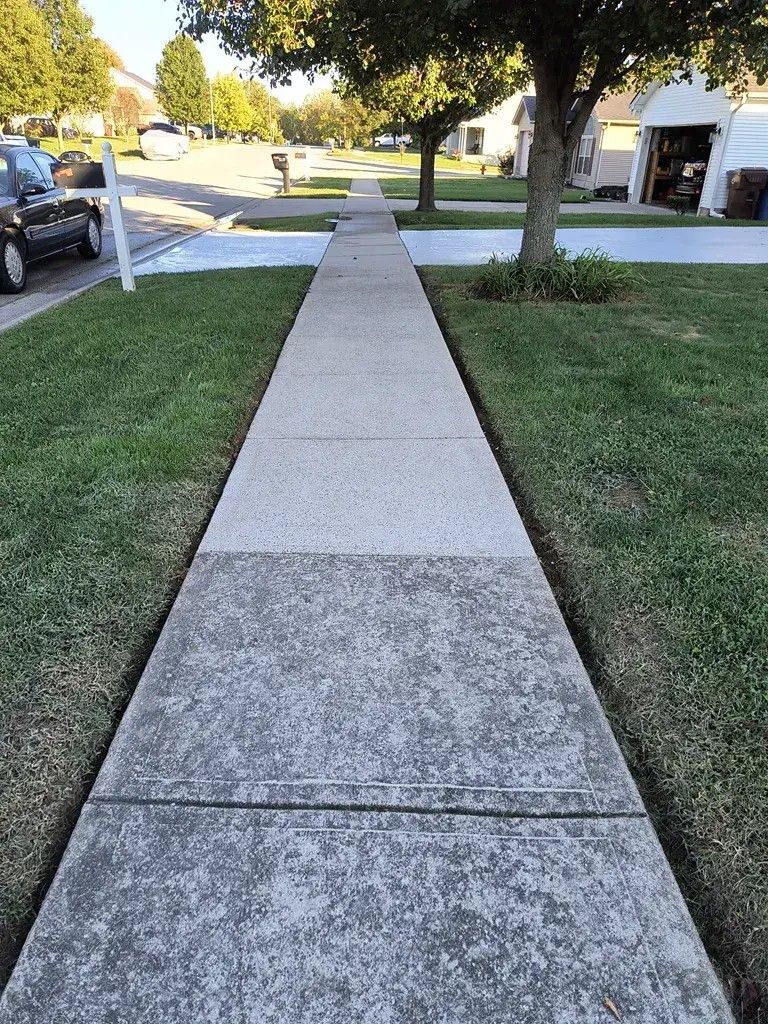
Access Surfaces That Handle Traffic and Weather
Driveway & Sidewalk Installation in Winchester for properties needing durable vehicle and pedestrian surfaces
New concrete driveway and sidewalk installation provides functional access and walking surfaces for properties where existing installations have failed or where none currently exist. The work involves site preparation, concrete placement, and finishing steps that vary based on soil conditions, intended traffic patterns, and drainage requirements. An on-site assessment identifies what preparation depth is needed, where grading adjustments are necessary, and what thickness the concrete must be to handle the load it will carry over decades of use.
SignatureCraft Solutions handles driveway and sidewalk installation in Winchester, Irvine, Frankfurt, and surrounding areas by evaluating the property's access needs, existing grade, and soil stability before project recommendations are finalized. Driveways require base preparation that prevents settling under repeated vehicle weight, while sidewalks need proper slope to shed water and avoid ice buildup during winter months.
Request a site visit to evaluate your property's access requirements and discuss installation options.
What Proper Installation Requires
Installation begins with excavation to remove unstable soil, followed by compacted gravel base placement that distributes weight and prevents sinking. The base depth depends on soil type—clay soils in Winchester often need deeper aggregate layers than sandy or rocky ground. Forms are set to define edges and control thickness, then concrete is placed, leveled, and finished with surfaces appropriate for the use: broom finish for traction on driveways and sidewalks, or smooth trowel finish for decorative applications.
After installation and curing, the driveway supports vehicle weight without cracking along edges or developing ruts in tire paths, and the surface sheds water toward drainage areas instead of pooling. Sidewalks provide level, stable walking surfaces that don't heave or settle unevenly with seasonal ground movement. Properly sloped installations prevent water from standing on the surface, which reduces freeze-thaw damage and extends the lifespan of the concrete.
Installation doesn't include decorative stamping or coloring unless specified during planning—those are separate finishing processes added based on appearance goals. Standard installations focus on durability and function, using reinforcement mesh or rebar as needed to prevent cracking under load. The project scope is determined entirely by your property's access needs and the site conditions identified during the assessment.
What Property Owners Usually Ask
Questions about driveway and sidewalk installation typically focus on preparation, durability, and how site conditions affect the finished surface.
What happens during site preparation before concrete is placed?
Excavation removes topsoil and unstable material, gravel base is placed and compacted in layers, and the site is graded to ensure water drains away from structures and off the concrete surface.
How thick does a driveway need to be to handle vehicles?
Most residential driveways require four to six inches of concrete depending on vehicle weight and soil conditions, with heavier vehicles or weaker soils demanding greater thickness and reinforcement.
Why do sidewalks crack even when they look well-built?
Cracking usually results from inadequate base compaction, insufficient control joints to manage natural concrete shrinkage, or ground movement caused by freeze-thaw cycles acting on poorly drained subgrade.
How do Winchester's soil conditions affect installation?
Clay soils expand and contract with moisture changes, requiring thicker compacted base layers and proper drainage design to minimize ground movement that stresses the concrete from below.
When can I use the driveway after installation?
Concrete reaches sufficient strength for light foot traffic within 24 to 48 hours, but full curing for vehicle traffic typically requires at least seven days to prevent surface damage and cracking.
Installation planning starts with understanding your property's access needs and evaluating the site conditions that affect long-term performance. SignatureCraft Solutions assesses soil stability, drainage patterns, and load requirements during the estimate process to ensure the installation matches your property's demands. Schedule an on-site consultation to review your driveway or sidewalk project.