Structural Block Work for Lasting Construction
Masonry Block Services in Winchester for commercial and residential projects requiring durable structural components
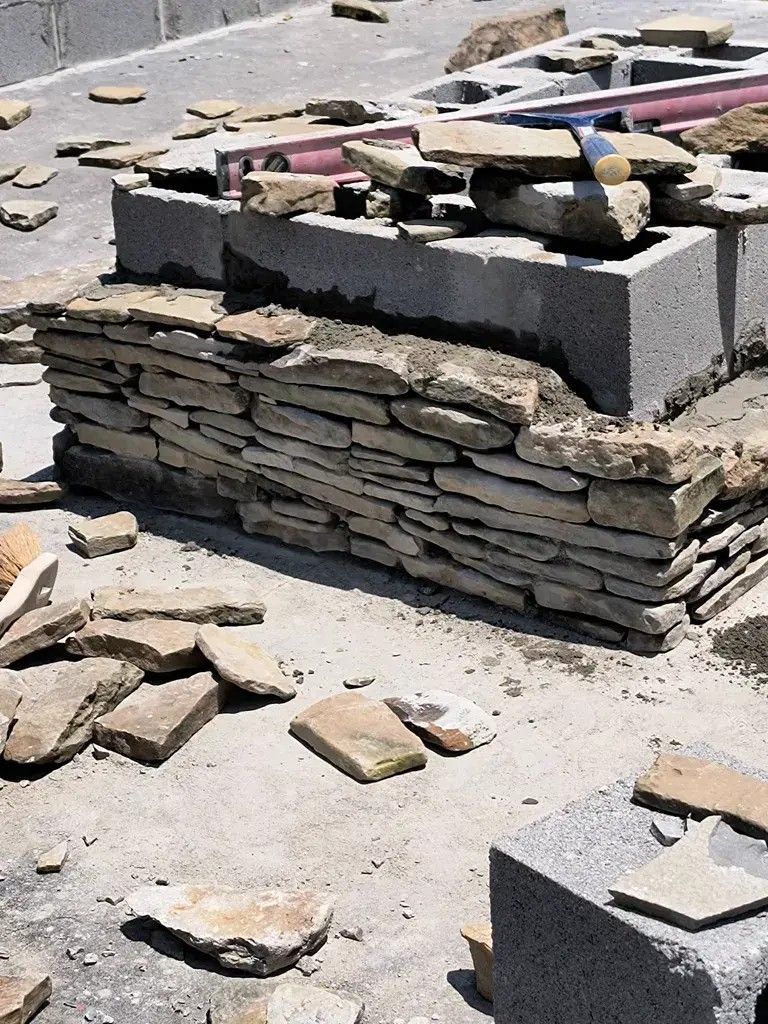
Concrete masonry units form walls, partitions, and structural supports in applications where strength, fire resistance, and dimensional stability matter. SignatureCraft Solutions provides masonry block services for construction projects, property improvements, and structural applications where block offers advantages over other building materials. The work involves laying block in running bond or other patterns, filling cores with grout and reinforcement as structural requirements dictate, and ensuring proper mortar joints for load transfer and weather resistance.
Masonry block construction requires attention to coursing, joint thickness, and alignment so walls remain plumb and level as they rise. Mortar must achieve proper consistency for workability and bond strength, and block placement must account for door and window openings, control joints, and tie-ins to existing structures or concrete foundations.
Schedule a consultation to discuss how masonry block fits your construction or improvement project.
What Masonry Block Construction Involves
Block masons begin by establishing a level foundation or footing surface, then laying the first course with careful attention to alignment since it determines the accuracy of every course above. Subsequent courses are laid with staggered vertical joints, and mortar is applied to bed and head joints before each unit is set. Corners are built first to establish guides, and string lines help maintain consistent height and straightness along wall lengths.
When construction is finished, you should see uniform mortar joints, plumb vertical surfaces, and block walls that bear loads without cracking or shifting. Properly constructed block walls do not show lippage between adjacent units, and control joints should be positioned to manage shrinkage and thermal movement without creating structural weakness.
Block selection affects both structural performance and appearance—standard concrete block, split-face block, and glazed units all serve different purposes. The project scope determines whether walls require reinforcement and grouting, which adds cost but provides significantly greater load-bearing capacity and lateral strength for tall walls or seismic regions.
Answers Property Owners Need About Block Work
Masonry block serves multiple roles in construction, so understanding when and how to use it helps with project planning.
What construction applications use masonry block?
Block is used for load-bearing walls, partition walls, retaining walls, equipment enclosures, and foundation stem walls. Its fire resistance and structural capacity make it suitable for commercial buildings, industrial facilities, and residential projects requiring durable enclosures.
How does masonry block coordinate with foundation work?
Block walls typically sit on concrete footings or foundation slabs, with vertical reinforcement extending from the foundation into the block cores. The connection between concrete and block must be planned so dowels or rebar are positioned where block cells will align.
What factors affect the strength of a block wall?
Core grouting, vertical and horizontal reinforcement, mortar mix proportions, and proper curing all influence wall strength. Unreinforced block walls rely on the bond between mortar and block face shells, while reinforced walls gain capacity from steel embedded in grout-filled cores.
When should control joints be included in block walls?
Control joints are placed at regular intervals—typically every 20 to 25 feet—and at changes in wall height or thickness to manage cracking caused by shrinkage and thermal expansion. They allow controlled movement rather than random cracking through the wall surface.
What determines whether a block wall needs reinforcement?
Building codes, wall height, lateral loads from wind or soil pressure, and whether the wall is load-bearing all determine reinforcement requirements. Taller walls and walls subjected to significant lateral forces generally require vertical rebar and horizontal bond beams with grout fill.
SignatureCraft Solutions handles masonry block services for structural and property improvement applications. Request an estimate to establish the scope and requirements for your specific project.