
Systems Built for Long-Term Wastewater Management
Septic Installation in Winchester for properties requiring permanent on-site wastewater solutions
SignatureCraft Solutions handles septic installation for residential and commercial properties that need a complete wastewater treatment system independent of municipal sewer connections. The work addresses properties in areas without centralized sewer access, lots with specific soil or drainage conditions, and developments where on-site treatment is the only viable option. Project planning begins with evaluating how your property's topography, soil composition, and water table depth affect system placement and function.
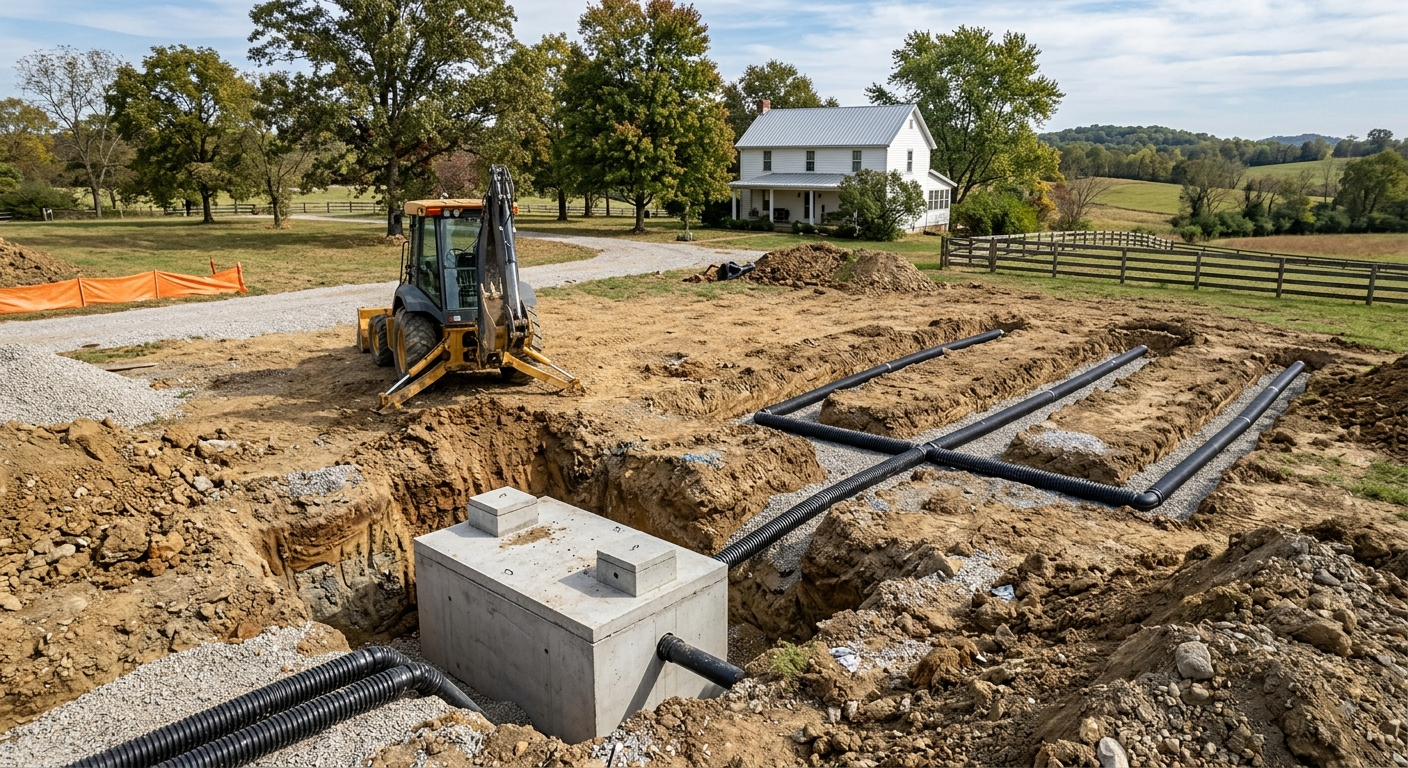
Septic installation involves excavating the drain field and tank location, positioning the tank and distribution components according to property conditions, and establishing the absorption area where treated effluent disperses into the surrounding soil. The system's design depends on daily wastewater volume, soil percolation rate, and the distance required between the drain field and wells, property lines, or surface water. Sandy soils require different drain field sizing than clay-heavy soils because water moves through each at different rates.
Schedule a property evaluation to assess soil conditions and determine system placement requirements for your site.
What Proper Septic Installation Requires
The installation process starts with site excavation that accounts for both the septic tank depth and the drain field layout, ensuring adequate separation from structures and water sources. Tank placement must allow for future access to inlet and outlet baffles while positioning the drain field in soil that can absorb and filter effluent without becoming saturated. Gravel bedding surrounds distribution pipes to maintain even flow and prevent soil compaction from blocking absorption.
Once the system is operational, wastewater from your property flows into the tank where solids settle and partial decomposition occurs, then clarified effluent moves into the drain field where soil bacteria complete treatment before water re-enters the groundwater. You'll notice that sinks, toilets, and drains function normally without backups, and the yard above the drain field remains stable without wet spots or surfacing effluent. The system operates passively, relying on gravity and soil biology rather than mechanical components that require frequent maintenance.
Septic installation includes tank positioning, pipe runs from the structure to the tank, and drain field construction, but does not include internal plumbing alterations, electrical work for any auxiliary components, or landscaping restoration beyond grading the disturbed area. Properties with high water tables, steep slopes, or restrictive soil layers may require engineered solutions that adjust system depth, include mounding, or add distribution chambers to achieve adequate treatment capacity.
Answers to Frequent Service Questions
Property owners often ask about system planning and what the installation process involves before committing to the project.
What determines where the septic system can be placed on my property?
Tank and drain field locations depend on setback distances from wells, property boundaries, and structures, plus soil conditions that allow adequate effluent absorption. Areas with shallow bedrock, high seasonal water tables, or heavy clay may limit placement options and require additional site work to create suitable conditions.
How does soil type affect the septic system design?
Soil percolation rate controls how quickly effluent can be absorbed, which determines drain field size—faster-draining sandy soils need smaller fields than slow-draining clay soils. Percolation testing during site evaluation measures how long water takes to drop a specific distance in a test hole, giving a rate that guides system sizing.
What happens if the property has a high water table?
High water tables reduce the soil depth available for effluent treatment and can cause system flooding during wet seasons. Installations in these conditions often require raising the drain field above grade using imported fill material, creating a mounded system that maintains separation between effluent and groundwater.
How long does a septic installation project typically take?
Most residential installations take several days to complete, including excavation, tank and pipe installation, drain field construction, and site restoration. Weather conditions, equipment access, and unexpected subsurface obstacles like ledge or large boulders can extend the timeline.
What should I know about maintaining the system after installation?
Septic tanks require pumping every few years to remove accumulated solids that don't decompose fully, preventing them from entering the drain field and clogging soil pores. Limiting water usage, avoiding disposal of non-biodegradable materials, and protecting the drain field from vehicle traffic help maintain system function over decades.
SignatureCraft Solutions provides septic installation planning based on your property's specific conditions and wastewater needs. Request a site assessment to review soil characteristics and discuss system options suitable for your lot.